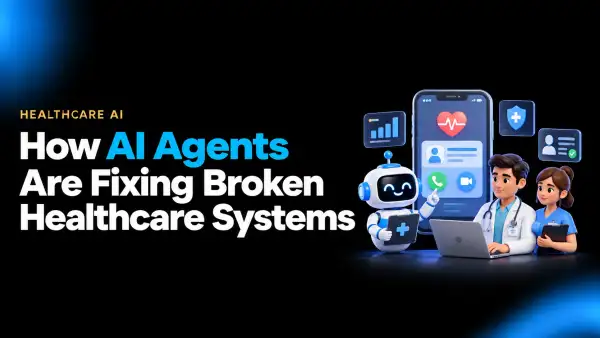
AI chatbots in healthcare are conversational assistants that answer patient questions, book and reschedule appointments, collect intake information, send reminders, and route people to the right care, through websites, patient portals, SMS, and apps. The best ones connect to scheduling and EHR systems, follow approved clinical content, and hand off to staff the moment a conversation needs clinical judgment. They take routine work off front desks and care teams without making medical decisions.
Patients are more open to AI answers than many assume. In a 2023 study in JAMA Internal Medicine, evaluators preferred chatbot responses to physician responses in 78.6% of 585 evaluations, and rated 45.1% of chatbot responses as empathetic compared with 4.6% of physician responses. That does not mean chatbots should replace clinicians, but it shows how much well-written, timely answers matter to patients.
This guide covers the highest-value use cases, the architecture behind a safe healthcare chatbot, costs with the math shown, compliance rules, and a step-by-step implementation plan. It reflects how EnactOn builds AI chatbot development projects for providers, clinics, and digital health companies.
What Are AI Chatbots in Healthcare?
AI chatbots in healthcare are software assistants that hold text or voice conversations with patients or staff and complete tasks during the conversation. Modern versions use large language models to understand free-text questions, retrieval to answer from approved content, and integrations to act in scheduling, EHR, and billing systems. They differ from older rule-based bots, which could only follow fixed menus.
| Type | How it works | Good for | Limitation |
|---|---|---|---|
| Rule-based bot | Fixed menus and decision trees | Simple FAQs and routing | Breaks on any unexpected question |
| LLM chatbot with retrieval | Understands free text and answers from approved content | Patient questions, policies, preparation instructions | Needs strict scope and content controls |
| Integrated AI assistant | LLM plus tools that read and write clinical and admin systems | Scheduling, intake, refills, billing questions | Needs integration work and strong governance |
Which Use Cases Do AI Chatbots in Healthcare Handle Best?
AI chatbots in healthcare deliver the most value on high-volume administrative and informational tasks where answers are clear and errors are easy to catch. Clinical diagnosis and treatment decisions should stay with clinicians.
| Use case | What the chatbot does | Systems it connects to |
|---|---|---|
| Appointment booking | Finds open slots, books, reschedules, and cancels | Practice management or EHR scheduling |
| Reminders and no-show reduction | Sends reminders and lets patients confirm or move visits | Scheduling, SMS gateway |
| Patient intake | Collects history, insurance, and consent forms before the visit | EHR, document storage |
| Pre-visit and post-visit instructions | Answers preparation and recovery questions from approved content | Content library, EHR for visit type |
| Prescription refill requests | Collects the request and routes it to the care team for approval | EHR, e-prescribing workflow |
| Billing and insurance questions | Explains bills, payment options, and coverage basics | Billing system, payment portal |
| Symptom navigation | Guides patients to the right care setting using approved protocols, never diagnosing | Clinical protocols, scheduling, nurse line |
| Staff assistant | Answers internal policy and procedure questions for staff | Policy documents, intranet |
Many of these flows run inside a portal or booking app, which we cover in our patient portal development guide and our guide to doctor appointment booking app development. For agent-style workflows beyond chat, see our AI agent use cases in healthcare.
How Does a Healthcare Chatbot Architecture Work?
A safe healthcare chatbot architecture has six layers: channels, a conversation engine, a safety layer, approved knowledge, integrations, and human handoff. Patient messages pass through safety checks before and after the model, answers come only from approved content or live system data, and anything clinical routes to staff.
-
Channels. Website widget, patient portal, SMS, WhatsApp where permitted, mobile app, or voice.
-
Conversation engine. An LLM, hosted under a business associate agreement, that understands intent and manages the conversation.
-
Safety layer. Detects emergencies, self-harm language, and clinical questions out of scope, then triggers scripted responses or escalation.
-
Approved knowledge. Retrieval over reviewed content such as visit instructions, policies, and FAQs, with version control and owners.
-
Integrations. FHIR or vendor APIs for scheduling, intake, and records, plus billing and messaging systems.
-
Human handoff and audit. Live transfer to staff with full context, and logs of every conversation for review and compliance.
The safety layer is not optional. A chatbot must recognize emergency language, such as chest pain or suicidal thoughts, and immediately direct the patient to emergency services or a crisis line instead of continuing the conversation.
How Do Chatbots Integrate With EHR and Patient Workflows?
Healthcare chatbots integrate through FHIR APIs, vendor scheduling APIs, and practice management system interfaces, usually with read access first and write access only where staff review the result. Booking an appointment, for example, reads open slots and writes a booking, while intake answers are written as a draft for staff to accept. For the wider picture of EHR interfaces such as SMART on FHIR, see our guide to AI in EHR.
-
Identity first. Verify the patient through portal login or one-time codes before sharing or changing any personal health information.
-
Minimum necessary data. Give the chatbot only the fields each task needs, not full chart access.
-
Drafts for clinical data. Write intake and symptom information as drafts for staff review, not directly into the chart.
-
Clear routing rules. Send refill requests, test result questions, and clinical concerns to the right team queue.
How Much Do AI Chatbots in Healthcare Cost?
AI chatbots in healthcare typically cost $10,000 to $20,000 for an informational chatbot and $30,000 to $100,000 for an integrated patient assistant. These ranges reflect typical projects with an experienced team; your final cost depends on integrations, channels, and compliance scope.
| Scope | Typical cost range | Timeline |
|---|---|---|
| Informational chatbot (no patient data), approved content only | $10,000 to $20,000 | 4 to 6 weeks |
| Scheduling chatbot with practice management or EHR integration | $20,000 to $40,000 | 6 to 10 weeks |
| Intake and pre-visit assistant with EHR draft write-back | $30,000 to $50,000 | 8 to 14 weeks |
| Multi-channel patient assistant with triage rules, handoff, and analytics | $60,000 to $100,000 | 4 to 6 months |
Running costs include HIPAA-eligible hosting, model usage, SMS fees, and content upkeep, which grow with conversation volume. Security spending is worth it: healthcare breaches carry the highest average cost of any industry in IBM’s Cost of a Data Breach research.
Scope a Safe Patient Chatbot EnactOn maps your patient conversations, systems, and safety rules, then gives you an architecture, estimate, and pilot plan for a chatbot your staff can trust. Discuss Your Idea →
What Compliance and Safety Rules Apply to Healthcare Chatbots?
Healthcare chatbots must follow HIPAA when they handle protected health information, avoid acting as unapproved medical devices, and disclose that patients are talking to AI. Safety comes from narrow scope, escalation rules, and regular review of real conversations. For oversight beyond the chatbot, see our guide to AI governance in healthcare.
-
HIPAA. Sign business associate agreements with model, hosting, and messaging vendors, and apply encryption, access controls, and audit logs. Our HIPAA compliance checklist for software development lists the controls.
-
No diagnosis. Chatbots should guide patients to care, not diagnose or recommend treatment, unless cleared for that purpose by regulators.
-
Emergency handling. Scripted responses for emergencies and crisis language must override the model.
-
AI disclosure. Tell patients they are chatting with an AI assistant and how to reach a person.
-
Content review. Clinicians approve all medical content the chatbot can draw on, with review dates.
-
Accessibility and languages. Support plain language, screen readers, and the main languages of your patients.
How Do You Implement an AI Chatbot in a Healthcare Organization?
Implement a healthcare chatbot by starting with one administrative workflow, building the safety layer first, and piloting with real patients before expanding. Seven steps keep risk low.
-
Pick one workflow. Scheduling or visit preparation questions are common first choices because volume is high and risk is low.
-
Collect real questions. Review call logs, portal messages, and front desk notes to find the top 50 questions and tasks.
-
Approve content. Have clinicians and operations staff review every answer the chatbot can give.
-
Design escalation. Define emergency triggers, handoff rules, and staff queues before building conversations.
-
Build and integrate. Connect scheduling or intake systems with minimum necessary access and full logging.
-
Test with staff, then patients. Run staff testing on hundreds of sample conversations, then a pilot with a small patient group.
-
Review and expand. Review conversations weekly, fix gaps, and add new workflows once metrics hold.
How Do You Measure Healthcare Chatbot Success?
Measure healthcare chatbot success by tasks completed, staff time saved, and patient experience, not just conversation counts. Track safety metrics separately and review them every week during the first months.
| Metric | What it shows |
|---|---|
| Task completion rate | Share of bookings, intakes, or questions completed without staff |
| Call and message deflection | Drop in front desk calls and portal messages for covered topics |
| No-show rate | Impact of reminders and easy rescheduling |
| Handoff rate and reasons | Where the chatbot reaches its limits |
| Escalation accuracy | Whether emergencies and clinical questions were routed correctly |
| Patient satisfaction | Short rating after each conversation |
What Mistakes Should Healthcare Teams Avoid With Chatbots?
The most damaging mistake is letting a chatbot answer clinical questions from general model knowledge instead of approved content. Other common mistakes are easy to prevent.
-
Unlimited scope. A chatbot that tries to answer everything will eventually answer something dangerously wrong.
-
No easy way to reach a person. Patients lose trust fast when they cannot get to staff.
-
Stale content. Outdated visit instructions or prices create complaints and risk.
-
Skipping identity checks. Sharing appointment or health details without verification is a privacy breach.
-
Launching without staff buy-in. Front desk and nursing teams must own handoffs, or patients fall through the gaps.
How Does EnactOn Build AI Chatbots in Healthcare?
EnactOn builds AI chatbots in healthcare with Intent-Driven Engineering: senior architects write a specification covering conversation scope, approved content, escalation rules, integrations, and HIPAA controls before development begins. Builds are AI-accelerated, and every clinical or sensitive conversation keeps a human handoff. EnactOn’s healthcare AI consulting work helps teams choose the first workflow.
EnactOn built BondMeds, a HIPAA-compliant telehealth MVP launched in 12 weeks that reached 1,200+ subscribers and 1,000+ consultations. The team has delivered 500+ projects across 65+ countries and holds a 4.8 rating on Clutch. Learn more about our HealthTech software development work, or compare partners in our list of AI chatbot development companies.
Conclusion
AI chatbots in healthcare work best on scheduling, intake, reminders, instructions, and billing questions, where they save staff time and give patients fast answers. Safety depends on narrow scope, approved content, emergency handling, and easy handoff to people.
Start with one workflow, connect only the data it needs, and review real conversations every week. If you are planning a patient chatbot, our team can help you scope it safely.
FAQs
What are AI chatbots in healthcare used for?
They are mainly used for appointment booking, reminders, patient intake, visit instructions, refill requests, billing questions, and guiding patients to the right care setting. Clinical decisions stay with clinicians.
Are healthcare chatbots HIPAA compliant?
They can be, if every vendor handling patient data signs a business associate agreement and the system uses encryption, access controls, identity checks, and audit logs. Compliance depends on how the chatbot is built and operated.
Can a healthcare chatbot diagnose patients?
General-purpose chatbots should not diagnose. Software that diagnoses or recommends treatment may be regulated as a medical device, so most chatbots guide patients to care instead.
How much does a healthcare chatbot cost?
An informational chatbot typically costs $10,000 to $20,000 to build, and an integrated patient assistant costs $30,000 to $100,000. Running costs depend on volume, hosting, and messaging fees.
How long does it take to build a healthcare chatbot?
Simple informational chatbots take about 4 to 6 weeks. Integrated assistants with scheduling or EHR connections usually take 6 to 14 weeks, and multi-channel platforms take several months.
Can a chatbot book appointments in our EHR?
Yes, if your EHR or practice management system offers scheduling APIs. The chatbot reads open slots, books the visit, and sends confirmations and reminders.
How do chatbots handle medical emergencies?
A safety layer detects emergency or crisis language and immediately shows scripted guidance to contact emergency services or a crisis line, overriding the AI model.
Do patients trust AI chatbots?
Many do for administrative tasks, especially when answers are fast and accurate. Trust drops when patients cannot reach a person, so clear handoff options are essential.
What channels can a healthcare chatbot use?
Common channels are website chat, patient portals, mobile apps, SMS, and voice. Messaging apps can work where they meet your privacy and compliance requirements.
Who should own a healthcare chatbot after launch?
An operations or patient access leader should own outcomes, with clinicians owning medical content and IT owning integrations and security. Weekly conversation reviews keep it accurate.
Can EnactOn build a HIPAA-compliant chatbot?
Yes. EnactOn builds healthcare chatbots with business associate agreements, minimum necessary data access, audit logs, and human handoff, and holds a 4.8 rating on Clutch.