An AI voice agent for healthcare is software that answers or places phone calls in natural speech, completes a task such as booking a visit, and passes the call to a person when it should. Unlike a “press 1 for appointments” phone tree, it understands what the caller says in their own words and acts on it, usually by reading and writing to your scheduling system.
This guide covers the full range of voice AI use cases in healthcare, from patient calls to clinical documentation to care at home. It then goes deeper on AI voice agents: the rules that apply (HIPAA, the business associate agreement, calling rules), how they connect to an EHR, which platforms exist, and how to roll one out without creating new problems. EnactOn builds these agents and is a Retell AI partner, so we say where a point is our own practice and not a published standard.
What is voice AI in healthcare?
Voice AI in healthcare is technology that understands spoken language, including medical terms, and acts on it. It shows up in five places, and they are easy to confuse:
| Area | What voice AI does | Typical tools |
|---|---|---|
| Patient access (phone) | Answers and places patient calls: scheduling, refills, reminders, recovery | Retell AI, Hyro, Kore.ai, Amelia |
| Clinical documentation | Listens during the visit and drafts the note for the clinician to review | Nuance DAX Copilot, Suki |
| Clinic and hospital use | Dictation and hands-free commands where touching a screen is impractical | Dragon Medical One |
| At-home and remote care | Check-ins, medication reminders and escalation for older adults and chronic-condition patients | Phone-based agents, voice assistants |
| Back office | Billing follow-ups, eligibility, claim status and payer calls | Specialist payer-calling products, Kore.ai |
This guide gives the most space to voice AI agents for healthcare that talk to patients on the phone, because that is where most buyers start and what we build. The other four areas get their own sections below, so you can see the whole picture and decide where to begin.
AI voice agents in the healthcare market: size and growth
Grand View Research projects the market for AI voice agents in healthcare to grow at a 37.9% CAGR between 2026 and 2033. A broader view of voice technology in healthcare, which includes dictation and documentation, comes from Polaris Market Research: a 19.9% CAGR to $21.67 billion by 2032. The two figures differ because the scope differs, so compare like with like when you quote either.
On the patient side, around 72% of patients say they are comfortable using voice AI assistants to schedule appointments.
Best use cases for voice AI in healthcare
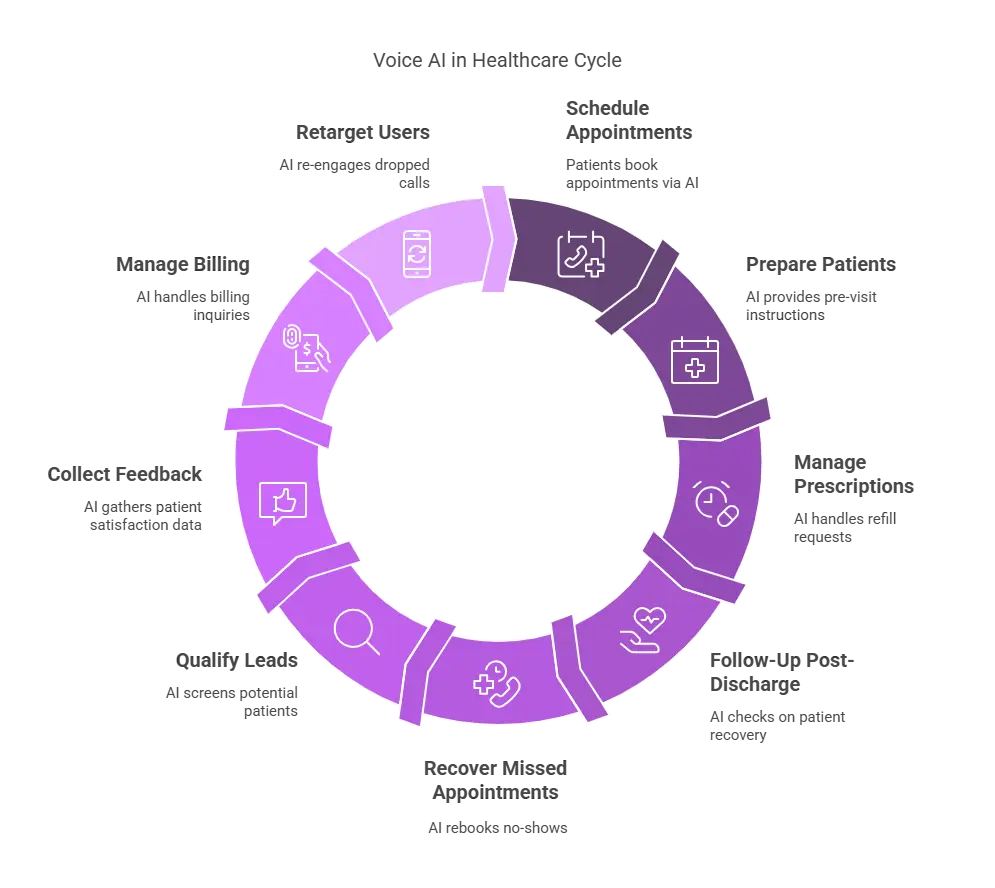
There are six groups of use cases. For each, this section says what the voice AI does and what to watch for. The first two groups, which are patient calls, are the most mature and the most common starting point.
Patient access: inbound calls
- Scheduling, rescheduling and cancellations. The caller says, “I need a follow-up with Dr. Patel next week.” The agent checks availability, applies your scheduling rules, books the slot and sends a confirmation. If you are building the booking side too, see our guide to doctor appointment booking app development.
- Refill requests. The agent verifies the caller, collects the prescription details and routes the request to the care team or pharmacy for approval.
- Routine questions and after-hours coverage. Hours, directions, visit preparation, accepted insurance. Calls that arrive at 10 p.m. get an answer or a booked slot instead of voicemail.
- Symptom screening and routing. The agent asks a short set of questions and routes the caller to a nurse line, an urgent slot or a regular booking. It routes; it does not diagnose.
Watch for: a missed urgent phrase such as “chest pain” is a clinical risk, so use conservative triggers, send anything uncertain to a person, and review routing decisions regularly.
Patient outreach: outbound calls
A voice calling AI agent in healthcare can place calls as well as answer them. The common outbound jobs:
- Pre-visit calls. Fasting instructions, forms, insurance details and symptom screening before the patient arrives, with anything urgent flagged to a nurse.
- No-show and missed-appointment recovery. The agent calls, offers a new time and rebooks, which keeps schedules full without staff chasing patients by hand.
- Waitlist backfill. When a slot opens, the agent calls waitlisted patients in order until someone takes it.
- Recovering abandoned bookings and intake forms. When someone starts a booking or intake form and stops, a short callback can finish it. We built this for CrossEven, with limits on call frequency, permitted calling windows and separate numbers for different call types. The details are in the CrossEven voice AI lead recovery case study, and the general approach is in our guide to recovering abandoned forms and checkouts with an AI voice agent.
- Patient surveys. Short conversational surveys after a visit tend to get more responses than a link in an email.
Watch for: outbound calls carry consent and calling-window rules (see the regulations section below), and a patient who gets repeated calls stops trusting the practice.
Clinical documentation and dictation
Documentation is where voice AI saves clinicians the most screen time. Ambient tools listen during the visit and draft the note for the clinician to review. Nuance’s DAX Copilot, for example, is documenting over 1.3 million physician-patient encounters each month across more than 500 U.S. healthcare groups. Investment in AI-powered medical note-taking apps reached $800 million in 2024, up from $390 million in 2023. Dragon Medical One lets providers dictate naturally and have the note appear in the EHR, and Suki acts as a voice assistant that learns how each doctor speaks and automates repetitive tasks.
Watch for: clinicians must review every note, especially medication names, doses and sides of the body. Patients should know the visit is being transcribed, and recording-consent rules vary by state. These tools are mostly bought, not built, so the real work is fitting them into your EHR and note templates.
Hands-free use in clinics and hospitals
Where touching a device is impractical, such as in an operating room, voice commands let doctors and nurses pull up information without stopping what they are doing. Dictation helps nurses and clinicians who have their hands full.
Watch for: noisy rooms, speaker identification and microphone placement. Any command that changes a record should be confirmed back before it takes effect.
At-home and remote care
For older adults and people managing a chronic condition at home, a phone or voice assistant is easier than an app. Voice AI can remind them to take medication, ask how they are feeling and alert a family member or the care team when an answer sounds wrong. After a hospital stay, the same pattern covers post-discharge follow-ups: ask about recovery, repeat the medication instructions, and book a check-in or escalate to a nurse. These are the calls behind AI patient care management and an audio-first extension of health monitoring app development.
Watch for: older callers who speak slowly, use hearing aids or have a television on in the background. Allow generous pauses, offer a fast route to a human, and write down what counts as an emergency. The agent should follow a script that tells the caller to contact emergency services and alerts staff, not decide for itself.
Back office: revenue cycle and payer calls
- Billing reminders and payment follow-ups. Consistent, polite balance reminders with a payment option on the call, so front-desk staff do not have to handle every difficult conversation.
- Eligibility, benefits verification and claim status. Some platforms are built to call payers, move through the payer’s phone menu, wait on hold and read back the answer. This is back-office work, and it is a separate product category from patient-facing agents.
Watch for: billing conversations are sensitive. Keep the tone neutral, never discuss a balance before verifying the caller, and hand off disputes to a person.
Why healthcare teams adopt voice AI
- Time. Fewer hours on notes and routine calls, which leaves more for patients.
- Coverage. Patients get help at 10 p.m., not only during office hours.
- Consistency. Follow-ups, pre-op instructions and post-discharge check-ins happen every time, even when the team is short-staffed.
- Access. No app to download: patients pick up the phone and speak, which suits people of all ages and, on many platforms, several languages.
What a healthcare call looks like end to end
A scheduling call shows where the design effort goes. The agent greets the caller and says it is an AI assistant. It asks for the caller’s name and date of birth before saying anything about their record. It finds the right provider and visit type, checks the live schedule, offers two slots, books the one the caller picks and writes it back to the EHR. It texts a confirmation. If the caller mentions chest pain or sounds distressed at any point, the agent stops the booking flow and transfers to staff with a summary, so the patient never repeats themselves.
Most of that is not voice technology. It is identity checks, scheduling rules, write-back to the record and handoff rules, which is why the integration and the rules matter more than the voice.
Regulations for AI voice agents in healthcare: HIPAA, BAA and calling rules
HIPAA and the business associate agreement
Under HHS guidance on HIPAA and cloud computing, a service provider that creates, receives, maintains or transmits electronic protected health information for you is a business associate, and a covered entity needs a signed business associate agreement (BAA) with it. HHS applies this even when the provider stores only encrypted data and cannot read it. A subcontractor that handles the data for your vendor is a business associate too.
For a voice agent, that means asking your vendor for the list of subprocessors that touch patient data (speech recognition, language model, storage) and confirming each one is covered before any real patient call goes through. Some platforms offer a BAA on standard plans; Retell AI states that it signs a BAA and requires one before PHI is sent, so check current terms for the plan you will actually use.
A BAA is the contract, not the whole job. These are the settings that decide whether the agent behaves safely:
- Verify identity before the agent says anything about a record.
- Redact or avoid storing details the agent does not need, and set retention limits on recordings and transcripts.
- Limit who can open recordings, and keep audit logs of access.
- Keep patient data out of model training.
Deploying a voice agent without sending patient data to third parties
A cloud voice agent always involves several vendors, so “no third parties” is not realistic. What you can control is how much patient data each one sees: a BAA with every vendor that touches PHI, redaction before transcripts are stored, short retention, no training on your data, and, for the most sensitive flows, self-hosted speech and language models. Self-hosting gives the tightest control and costs more to run and maintain, so it is usually reserved for specific flows, not the whole agent.
Calling rules for outbound calls
In February 2024 the FCC ruled that AI-generated voices count as an “artificial or prerecorded voice” under the TCPA. Per the FCC announcement, calls using them fall under the same consent and caller-identification requirements as other robocalls. Exemptions exist for certain healthcare calls, but they are narrow and come with conditions on who can call, who can be called and how often. State laws can add more. Treat this as a design input, not a footnote: build consent records, calling windows and opt-out handling into the agent, and have counsel confirm the rules for each type of call you plan to make. This is general information, not legal advice. For the failures that show up once an agent is live, see AI voice agent challenges in production.
How AI voice agents connect to your EHR
A voice agent is only as useful as its access to your systems. To book an appointment it needs to read provider schedules, visit types and the patient record, then write the confirmed slot back. There are three common routes:
- The EHR’s own API. Major systems such as Epic and athenahealth offer integration programs, with different approval steps and limits. Retell AI, for example, lists connections to systems such as Epic and eClinicalWorks and supports custom functions for anything else.
- FHIR or HL7 interfaces. The standard route when you need the same agent to work across more than one system.
- Middleware. When the system is older or has no usable API, a thin integration layer translates between the agent and the record.
The failures to test for are write-back errors, double bookings and mismatched visit types, not mishearing. For more on integration work, see our healthcare data integration service and our guide to AI in EHR.
Top AI voice agents for healthcare: leading platforms
| Platform | Best suited to | Approach |
|---|---|---|
| Retell AI | Custom phone agents built to your workflow | Platform and API; you or a partner build the agent logic and integrations |
| Hyro | Hospitals, payers and multi-site systems | Packaged assistants across phone, web and mobile |
| Kore.ai | Multi-step workflows across providers, payers and pharmacies | Enterprise voice and chat automation |
| Nuance (Microsoft) | Large systems on Microsoft tools, call centers and documentation | Enterprise suite |
| Amelia | Nuanced conversations such as benefits explanations | Context-aware conversational agents |
EnactOn is a Retell AI partner, so we are not a neutral reviewer of that row; the table describes each approach so you can match it to your situation.
Retell AI
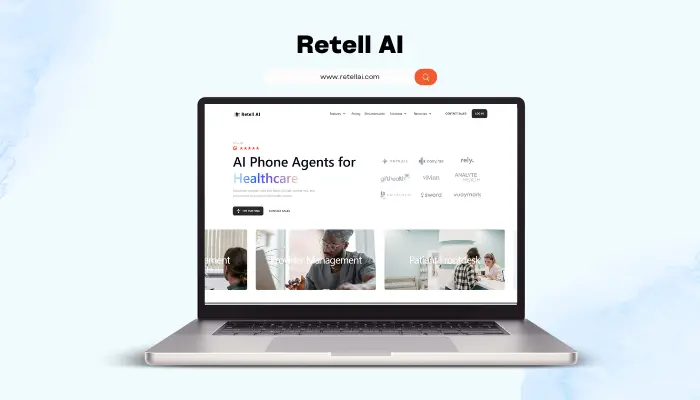
Retell AI is a voice platform for building phone agents rather than a finished healthcare product. Teams use it to build agents for appointment booking, intake and follow-ups, with the conversation logic and EHR connections designed around their own workflows. That flexibility is the reason to choose it for custom flows, and the reason it needs a build partner if you do not have engineers.
Hyro
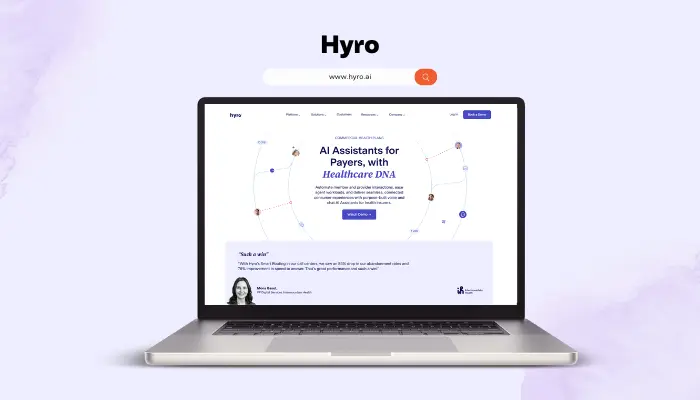
Hyro offers an adaptive communications platform that brings voice, web and mobile assistants into existing healthcare systems to automate scheduling, triage and FAQs. Its plug-and-play approach suits hospitals, payers and multi-location systems that want consistency across channels without custom builds.
Kore.ai
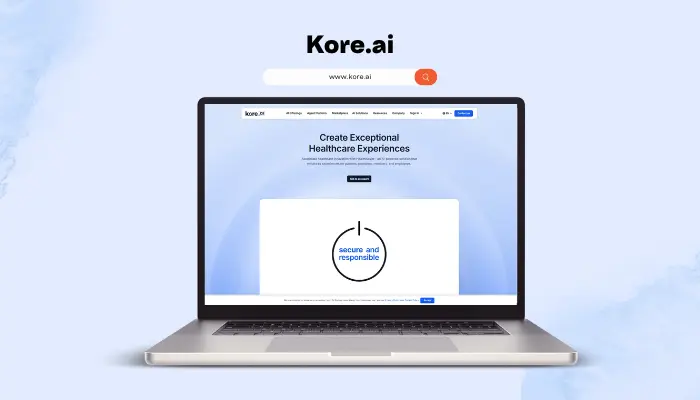
Kore.ai provides enterprise voice and chat automation with deep backend integrations. Providers, insurers and pharmacies use it for scheduling, insurance verification and claims support, including multi-step flows where a caller asks about a denied claim and the agent checks status and explains next steps.
Nuance (part of Microsoft)
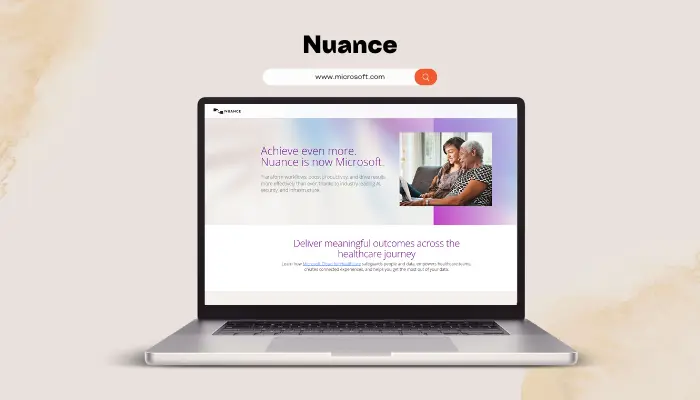
Nuance is best known for clinical documentation, and now also offers virtual agents for patient-facing call centers. It is a natural fit for health systems that already run on Microsoft’s cloud and AI stack.
Amelia
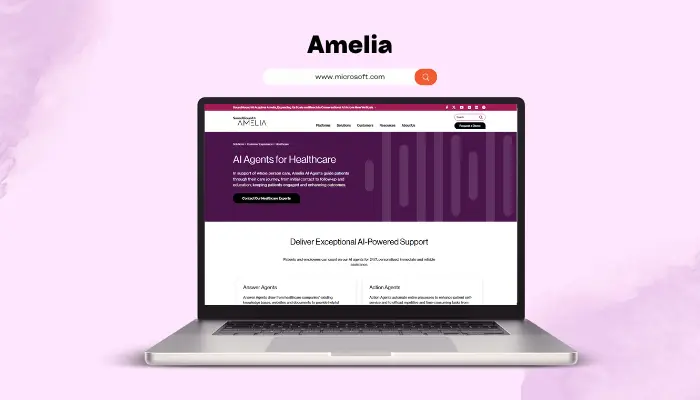
Amelia focuses on context-aware agents that handle conversations that do not follow a script, such as benefits explanations or care plan guidance, and can adapt when the caller changes the topic or needs escalation.
Build or buy
Buy a packaged product when your workflow is standard and your EHR is one the vendor already supports. Build on a platform such as Retell AI when you need a flow the packaged products do not offer, such as recovering abandoned bookings with strict calling limits, a multi-step intake, or an integration with an older system.
| Situation | Better fit |
|---|---|
| Standard scheduling and reminders on a mainstream EHR | Packaged product |
| Custom intake, recovery or routing logic | Build on a platform |
| Older system with no usable API | Build, with middleware |
| Back-office payer calls at scale | Specialist payer-calling product |
If you are weighing the build route, see voice AI agent development and Retell AI integration.
How to roll out an AI voice agent in a healthcare practice
- Start with one call type. Pick a high-volume workflow with clear rules, such as scheduling or no-show recovery, not everything at once.
- Write the handoff rules first. Decide which situations always go to a person: urgent symptoms, distress, complaints and billing disputes. Transfer with a summary so the caller does not repeat themselves.
- Tell callers it is an AI. Say so in the first sentence, and identify your organization.
- Connect the EHR and test with realistic calls. Include accents, background noise, interruptions and callers who change their mind mid-call.
- Pilot narrowly. One location, or the after-hours line, before the main number.
- Measure and review. Track calls completed end to end, booking accuracy, transfer rate, hang-ups and complaints, and read transcripts every week at first.
Limits to plan for
- Accuracy. Voice AI can mishear medical terms, names, noise and strong accents. Test with your own patient population, not demo audio.
- Uneven performance across dialects. If the agent understands some accents less well, that is a patient-access problem, so measure it by group.
- Clinical questions. The agent should not give medical advice. Restrict it to an approved knowledge base and route clinical questions to staff.
- Legacy software. Older systems take planning and sometimes middleware before an agent can book into them.
Where voice AI in healthcare is heading
Expect voice to become the first point of contact for routine tasks, with staff handling the exceptions. Expect post-discharge and chronic-care check-ins to become standard, and agents to connect to the patient portal and telemedicine platform so one conversation can carry across channels. The practices that benefit most will be the ones that fixed their scheduling rules and EHR integration first.
EnactOn’s healthcare work
Through our voice AI agent development service, EnactOn builds HIPAA-compliant voice agents that handle appointment scheduling, patient intake calls and follow-ups inside your existing EHR and telephony systems. Our healthcare work includes the CrossEven voice agent described above and a HIPAA-compliant telehealth MVP built in 12 weeks for a US client. See also our healthcare AI development services, and if the agent will sit beside a patient-facing product, our guides to patient portal development and telemedicine app development.
If you have a call workflow in mind, tell us which one and which EHR you use, and we will say whether to build or buy.
Frequently Asked Questions
What is voice AI in healthcare?
Voice AI in healthcare is technology that understands spoken language, including medical terms, and acts on it. It is used in five areas: AI phone agents that handle patient calls, ambient tools that draft clinical notes from the visit, dictation and hands-free commands in clinics, check-ins for care at home, and back-office calls such as billing and payer follow-ups.
What are the best use cases for voice AI in healthcare?
The strongest use cases are high-volume and rule-based: appointment scheduling, refill requests, reminders, no-show and abandoned-booking recovery, and billing follow-ups on the phone, plus ambient documentation for clinicians. Clinical triage and care at home work too, but need more careful routing and human backup.
How are AI voice agents used in healthcare?
Providers use AI voice agents to schedule and reschedule appointments, answer routine questions after hours, handle refill requests, run pre-visit and post-discharge calls, recover no-shows and abandoned bookings, and follow up on billing, eligibility and claim status.
Are AI voice agents in healthcare HIPAA compliant?
They can be. Under HHS guidance, a vendor that creates, receives, maintains or transmits patient data for you is a business associate, so a signed business associate agreement (BAA) must be in place before any protected health information moves. Compliance then depends on configuration: identity checks before disclosure, redaction, retention limits, access controls and audit logs. EnactOn builds voice agents on that basis.
Can an AI voice agent connect to Epic or athenahealth?
Usually yes, through the EHR’s API, a FHIR or HL7 interface, or middleware when the system is older. The agent reads the schedule and patient record and writes the confirmed appointment back. Integration quality, not the voice layer, is what most often decides whether a pilot works.
Can AI voice agents make outbound patient calls?
Yes, but outbound calls carry extra rules. The FCC ruled in February 2024 that AI-generated voices count as artificial voices under the TCPA, so calls generally need the right consent and caller identification unless a specific exemption applies. Healthcare exemptions are narrow and conditional, so have counsel confirm the rules for each call type.
What are the limitations of voice AI in healthcare?
Voice AI can still mishear medical terms, names and strong accents, may perform unevenly across dialects, and is hard to connect to legacy software. It should not give medical advice, so urgent or clinical questions need a defined handoff to staff.
Which platforms provide AI voice agents for healthcare?
Retell AI, Hyro, Kore.ai, Nuance (part of Microsoft) and Amelia all offer voice agents used in healthcare. Retell AI is a platform you build on, which is the route EnactOn, a Retell AI partner, takes for custom healthcare workflows; the others are more packaged products.