
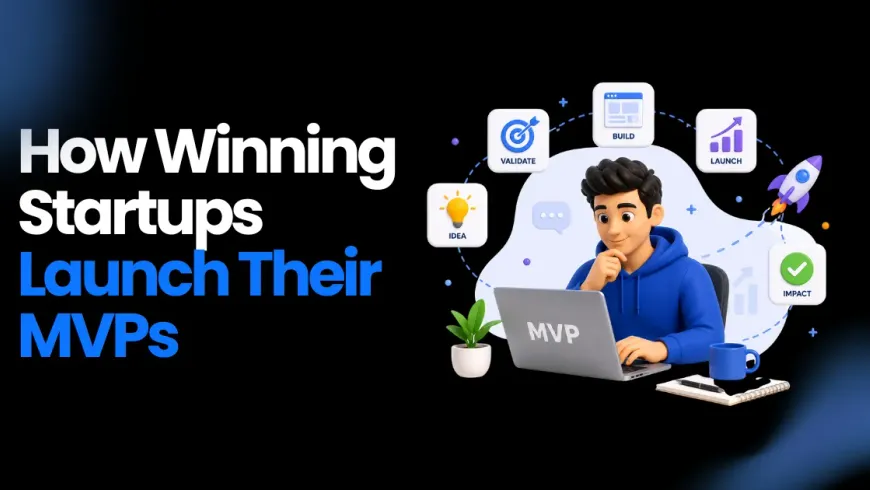
If you are planning a new product launch, understanding how to build an MVP effectively shapes almost everything that happens after you start. Most advice focuses on speed: launch fast, iterate, get something in front of users. That advice skips the part that decides whether speed even helps you. Building the wrong thing quickly just means you find out it is wrong sooner, after the budget is already spent. This guide details what a solid MVP development process looks like, where most projects lose their way, and what good discovery looks like in practice.
The MVP development process is the structured methodology used to define, design, and build the first usable version of a product. A successful process relies on an initial MVP discovery phase to validate market assumptions and strict feature prioritization to prevent scope creep, ensuring capital is spent only on features that prove the core business model.
If you are planning a new product launch, understanding how to build an MVP effectively shapes almost everything that happens after you start. Most advice focuses on speed: launch fast, iterate, get something in front of users. That advice skips the part that decides whether speed even helps you. Building the wrong thing quickly just means you find out it is wrong sooner, after the budget is already spent.
This guide details what a solid MVP development process looks like, where most projects lose their way, and what good discovery looks like in practice.
What is an MVP development process?
An MVP development process is the sequence of steps used to define, design, build, test, and launch the first usable version of a product. If you are new to this concept, reading our guide on what an MVP is can help you understand the core philosophy behind it. Ultimately, its purpose is not completeness, but rather learning as quickly and cheaply as possible, whether the idea actually works.
A full product roadmap keeps adding features until the product feels complete. An MVP process runs the opposite way: features get removed until what is left is just enough to test the core idea.
| Approach | Primary Goal | Scope Management | Technology Choice |
|---|---|---|---|
| Discovery-First MVP | Validating market need | Cuts 30 to 40 percent of non-essential features early | Chosen for long-term scalability |
| Speed-First Build | Launching a feature list fast | Builds on unverified assumptions | Chosen for immediate developer convenience |
What are the MVP development phases?
A standard MVP development process runs through eight distinct phases. The first three phases matter the most because they define the product scope, and they are also the phases that get rushed most often.
-
Requirements review and gap analysis: Going through the original idea and figuring out what is missing before any real conversation happens.
-
Discovery and market research: Understanding the business model, the competitive landscape, and what target users actually need.
-
Scope definition and feature prioritization: Lining up your goals, competitor gaps, and user needs to decide what belongs in version one.
-
Solution design: Creating wireframes, user flows, technical architecture, and a requirements document.
-
Technology stack selection: Choosing the stack that fits the product, not just the one that is most familiar.
-
Agile development: Running structured sprints with visibility into progress as it happens.
-
QA, security, and deployment: Executing testing cycles, performance checks, and getting ready to go live.
-
Post-launch support and iteration: Monitoring, fixing issues, and planning what is next.
Why do most MVP projects fail?
Most MVP failures are not about bad code; they are about scope. A first version is often built around what the founder originally assumed, rather than what users actually need or what the market will support.
By the time real users show you which assumptions were incorrect, the budget is gone, and the architecture is locked in. The 2026 MVP statistics make this concrete: 42% of startups fail not because of bad code, but because they built something the market never wanted. CB Insights’ analysis of startup post-mortems found that the single biggest reason startups fail is that there was no real market need for what they built.
A good MVP process exists to test assumptions before they get built into the product. That is what discovery is for, and it is the phase most projects shortchange.
What happens during the MVP discovery process?
The MVP discovery process happens before any design or development work begins. The goal is to understand the business model, define the target user, research the market, and identify risks before locking them into a build. A key part of this is understanding how to calculate your market potential, specifically your TAM, SAM, and SOM - so you are building for a segment that can actually sustain a business.
A good part of this is just filling in gaps. Most founders can describe what they want to build, but fewer can explain the problem it solves. Working through those gaps early means the right questions get asked before anyone starts building. During this pre-code stage, many founders also want to know how to protect their app idea from intellectual property risks before sharing specifications with developers.
Clarify the problem and protect your app idea before development begins.
How to scope an MVP?
Scoping an MVP requires lining up three distinct factors: what you want the product to achieve, where competitors fall short globally, and what users actually need based on localized market dynamics. Features that hit all three become the MVP, while everything else becomes the roadmap.
The Standish Group’s CHAOS Report consistently shows that poorly defined requirements are a leading cause of project failure. EnactOn manages this risk using our Target-Market Alignment Framework:
-
Layer 1 (Vision): What you want to build and the business goals behind it, filtered through a Product-Founder Mindset.
-
Layer 2 (Global & Cross-Industry Market Gap): We analyze direct competitors in your local market, run cross-country competitor audits (mapping what works in international hubs), and perform cross-industry feature extraction (analyzing how unrelated industries solve similar user experience challenges).
-
Layer 3 (Localized User Need): We evaluate target market demographics and localized user behavior. A feature that succeeds in the U.S. may fail in Switzerland due to differing user psychology, regional regulations, and localized workflows. We only approve features that align with the specific cultural and behavioral dynamics of your target audience.
The MVP is whatever sits at the intersection of all three layers.
How does MVP feature prioritization work?
MVP feature prioritization works by stripping away any feature that does not actively prove the core concept. By applying the Target-Market Alignment Framework, teams typically remove 30 to 40 percent of an original feature list before development even starts.
This is not because those features are bad ideas, but because they do not need to be part of proving the concept. To prioritize effectively, grade your features against a strict matrix:
| Feature Assessment | Outcome |
|---|---|
| Hits Vision, Global/Cross-Industry Gaps, and Localized User Needs | Approved for Version One |
| Missing one or two core layers, or lacks cultural validation | Moved to Post-Launch Roadmap |
| Based purely on the founder’s assumption without market validation | Eliminated |
What is included in MVP solution design?
Once the scope is settled, solution design turns that concept into concrete documentation. Four items must be reviewed and approved before development starts: wireframes, user flows, technical architecture, and a requirements document.
-
Wireframes: Show what the interface looks like and how people move through it.
-
User flows: Map out the journey for each type of user.
-
Technical architecture: Covers the system design, database structure, and infrastructure.
-
Requirements document: Spells out the functional and non-functional details that guide development.
How to choose a tech stack for an MVP?
The right tech stack for an MVP is the one that fits the product’s actual requirements and future scaling needs, not just the one that is most familiar to the development team.
A stack picked for convenience during development can leave you with maintenance and scaling headaches for years afterward. Depending on the product, this often includes robust backends like Python or Node.js, cross-platform mobile frameworks like React Native, scalable databases like PostgreSQL, and reliable cloud hosting via AWS. The choice must come with a clear explanation of the trade-offs involved.
What happens during agile development, QA, and deployment?
Once engineering begins, development runs in structured agile sprints. This provides direct visibility into progress through bi-weekly demonstrations, ensuring that necessary architectural trade-offs are addressed in real time rather than showing up as a surprise at final delivery.
Before the application is deployed live to production cloud environments, it passes through an automated QA pipeline containing four strict evaluation gates:
-
Functional Testing: Verifying that every user flow, button click, and data validation works exactly as specified in the requirements document.
-
Security Vulnerability Auditing: Scanning code repositories for security holes, data leaks, and authentication flaws.
-
Performance and Load Testing: Simulating high-concurrency traffic spikes to ensure the database handles real-world user activity without latency.
-
Deployment Readiness Verification: Final validation of cloud infrastructure configurations and failover protocols.
What happens after an MVP launches?
Post-launch is where the most critical product decisions occur, because choices are now driven by objective user metrics rather than subjective founder assumptions. This phase covers tracking system stability, fixing production bugs, and planning feature iterations.
Real-world users surface operational priorities fast: unpredicted edge cases, user flows that confuse non-technical customers, or simple features that suddenly become critical to retaining users. Planning for these iterations starts at launch, using clear product analytics tools to track where users drop off and what features they interact with most. To get meaningful feedback, founders need active early adopters; we outline how to find them in our guide on tester acquisition strategies for early-stage products.
Launch your MVP, win early users, and start the feedback loop.
A Checklist on How to Build an MVP
To keep your launch on track, follow this sequential checklist on how to build an MVP without scope creep:
-
Define the Core Problem: Focus on the single most painful problem your target users experience.
-
Run Global Discovery: Audit competitor models locally and internationally to find product gaps.
-
Apply Feature Scoping: Remove 30% to 40% of non-essential features from your initial brainstorm list using the Target-Market Alignment Framework.
-
Select a Scalable Tech Stack: Pick robust frameworks (like Node.js, Python, or React Native) based on scaling needs, not developer convenience.
-
Refer to Intent-Driven Engineering: Write strict specification documents before generating boilerplate code to accelerate velocity.
-
Run a 4-Gate Secure QA Check: Human-audit all functional flows, security vulnerabilities, load capacities, and deployment protocols before going live.
How does EnactOn approach MVP development?
EnactOn approaches MVP development for startups by combining a founder-first discovery process with Intent-Driven Engineering to prioritize market validation over blind coding. Unlike traditional development firms, we utilize secure AI agent orchestration governed by strict human-in-the-loop protocols to deliver scalable architectures at a fraction of the standard time and cost. We specialize in providing tailored MVP development services for startups designed to help founders validate their ideas rapidly.
Our 90% repeat partner rate is driven by four core pillars:
The Product-Founder Mindset:
-
First-Hand Experience: We started as a product company—building, launching, and monetizing our own internal software applications before building for others.
-
Assumption Auditing: Having managed our own startup economics, we audit your requirements from a founder’s perspective, actively challenging assumptions.
-
Outcome: We help you eliminate non-essential features early, saving your capital and maximizing runway.
Target-Market Discovery Engine:
-
Global Competitor Auditing: We conduct thorough local and global competitor research to map out international feature benchmarks.
-
Cross-Industry UX Extraction: We analyze user behavior patterns in unrelated industries to find innovative ways to solve your product’s onboarding, checkout, or engagement challenges.
-
Target Localization Auditing: We validate every feature against your target market’s specific regional dynamics. For example, a feature optimized for quick-service convenience in the U.S. might fail in Switzerland due to differing data privacy expectations and work cultures.
-
Outcome: You get a validated feature list before writing a single line of code, ensuring you build only what users actually engage with.
Intent-Driven Engineering (IDE):
-
Architecture First: Senior software architects define strict system specifications, database schemas, and workflows.
-
AI-Native Generation: We utilize secure AI agent orchestration to generate high-quality boilerplate code under strict developer oversight.
-
Human Governance: Every line of code is human-reviewed and refined by senior engineers to maintain clean architecture.
-
Outcome: We accelerate your velocity, cutting time-to-market by up to 60% while protecting your startup runway.
4-Gate Secure QA Pipeline:
-
Gate 1: Functional Testing: Verifying user flows, clicks, and data validations against spec documents.
-
Gate 2: Security Vulnerability Auditing: Scanning repositories for security holes, leaks, and authentication flaws.
-
Gate 3: Performance & Load Testing: Simulating concurrent traffic spikes to ensure database responsiveness.
-
Gate 4: Deployment Readiness: Validating cloud infrastructure configurations and failover protocols.
-
Outcome: We guarantee that raw AI-generated code never enters production, ensuring enterprise-grade stability and security.
EnactOn vs. Traditional MVP Development Companies
The following comparison table outlines how EnactOn’s approach compares to traditional development agencies:
| Feature / Capability | Traditional Development Agencies | EnactOn MVP Approach |
|---|---|---|
| Discovery Depth | Purely execution-focused. They build whatever is in the founder’s brief without verifying market viability. | Target-Market Discovery. Includes local/global competitor research, cross-industry analysis, and cultural localization. |
| Feature Prioritization | Driven by founder assumptions, often leading to scope creep and wasted capital on non-essential features. | Data-Driven Slicing. Strips 30-40% of non-essential bloat using our Target-Market Alignment Framework. |
| Engineering Velocity | Manual boilerplate coding and slow engineering cycles. | Intent-Driven Engineering (IDE). AI-native generation with human governance, accelerating launch speed by 60%. |
| Quality & Security | Manual, post-hoc QA testing, often neglecting deep security audits. | 4-Gate Secure QA Pipeline. Automates and audits functional, security, load, and infrastructure readiness. |
| Product Experience | Developers who write code but have never launched or sold their own software. | Product-Founder Mindset. Engineered by builders who have successfully launched and scaled their own SaaS platforms. |
Across more than 500 digital products delivered in over 65 countries, this integrated framework ensures your MVP is engineered strictly for rapid market validation, minimized capital risk, and investment readiness. Launching a validated product is often the first step to securing capital.
Preparing to pitch investors? Read our app funding guide before approaching angels and VCs.
Frequently Asked Questions (FAQs)
What is the difference between an MVP and a prototype?
A prototype is a preliminary model (often interactive designs or wireframes) used to visualize the product and test early user concepts. An MVP (Minimum Viable Product) is a functional, deployable version of the software with core features designed to gather real-world usage data and validate market demand. EnactOn uses the Target-Market Alignment Framework to ensure that the developed MVP is a stable, launch-ready application, rather than just a cosmetic prototype.
How do you prevent scope creep during MVP development?
Scope creep is managed by prioritizing features against a structured validation matrix. By assessing whether a feature aligns with global competitive gaps, your product vision, and localized target user behavior, non-essential features are eliminated. This process typically removes 30% to 40% of the initial feature list, keeping the project focused on what users actually need and protecting the development budget.
Why does a feature that works in one market fail in another?
User behavior is shaped by regional dynamics, cultural workflows, and local psychology. For example, a feature optimized for quick-service convenience in the U.S. might fail in Switzerland if it doesn’t align with local data privacy habits or regional business structures. Understanding and adjusting to these target market differences is key to a successful MVP launch and adoption.
Is AI code generation safe for production-grade software?
AI code generation accelerates development velocity but requires strict oversight to prevent security risks. EnactOn balances speed and stability through Intent-Driven Engineering. Senior architects define detailed specifications, and all AI-generated boilerplate code passes through a human-governed 4-Gate Secure QA Pipeline to verify functionality, performance, and data security before deployment.
How do we manage data compliance (like GDPR or Swiss nFADP) when building a global MVP?
Building for European or Swiss markets requires addressing privacy-by-design from day one. We ensure your MVP is architected to comply with regional data standards (including Swiss nFADP and GDPR) without slowing down development speed.
How does cross-market localization impact our MVP roadmap?
We analyze market-specific dynamics early. A feature set built for a US startup might need adjustment in Switzerland due to differing user expectations, payment gateways, or integrations. We prioritize features that match the target region’s cultural habits, saving you from rebuilding later.
What is a realistic budget for a founder-first MVP?
A lean, validated MVP typically ranges from $5,000 to $15,000, depending on complexity. To see a detailed developmental cost breakdown from lean builds to enterprise setups, read our guide on the cost to build an MVP. Our scoping process cuts out 30-40% of non-essential features, ensuring you spend your budget only on what actively validates your idea in the market.

![Add Daily Streak Feature & Boost Retention [Developer's Guide]](/assets/images/Daily-Streak-Feature-CrngYAnj_Z1rD3F2.webp)